Top COPD Trends | Health & Wellness
If You Have COPD, Here's Why You Can't Catch Your Breath
By: Walter Chao | Sponsored by Carda Health
March 15, 2026
It's not just "bad lungs." Something else is going on.
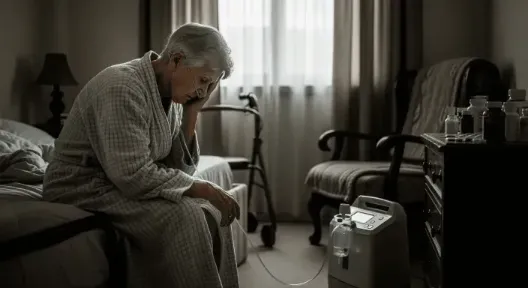
You bent down to tie your shoes this morning.
And by the time you stood back up, you were gasping.
Not from pain. Not from dizziness.
Just… out of breath.
From tying your shoes.
Then you took a shower. Had to sit down halfway through because you couldn't breathe.
Then you got dressed. Needed a break before you even left the bedroom.
And the day hadn't even started yet.
If you have COPD, you know this feeling. That air hunger. That tightness in your chest. That moment where you're standing completely still — and your body is panting like you just sprinted up a flight of stairs.
Some people describe it as breathing through a straw.
Others say it feels like drowning — on dry land.
You've probably been told this is just what COPD does. That it's your new normal. That you should "take it easy" and "pace yourself."
But what if that's not the whole story?
What if there's a specific, mechanical reason you can't catch your breath — and a way to actually fix it?
It's Not Just Damaged Lungs. Here's What's Really Happening.
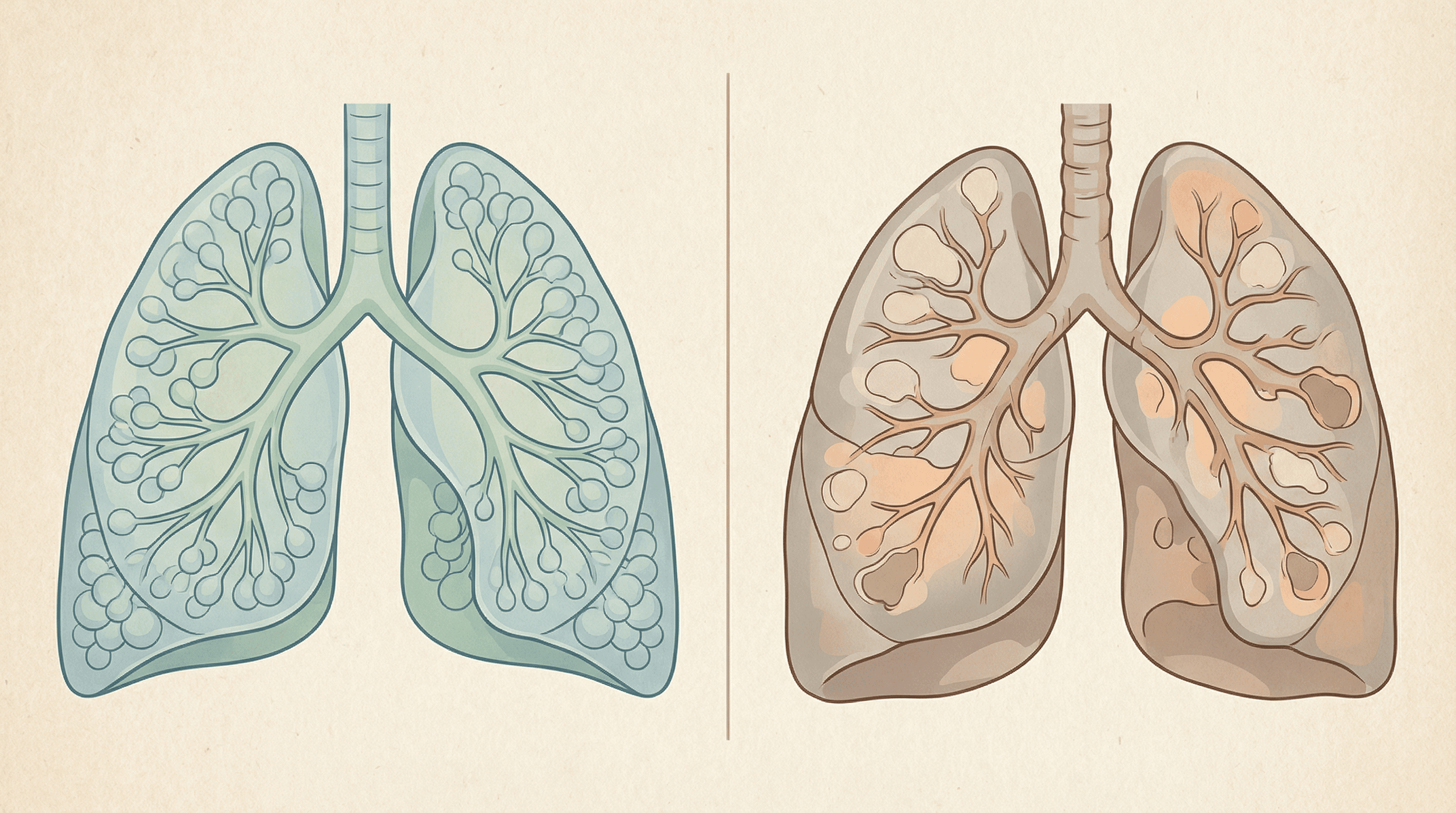
Most people think COPD breathlessness is simple: your lungs are damaged, so you can't breathe well.
That's part of it.
But it's not why you're gasping after tying your shoes.
Here's what's actually going on inside your body.
Your lungs are trapping old air.
With COPD, your airways lose their elasticity. They start to collapse a little when you exhale. So instead of pushing all the stale air out, some of it stays stuck inside.
This is called lung hyperinflation.
And it creates a problem you can feel with every single breath.
When old air is trapped inside your lungs, there's less room for fresh, oxygen-rich air to come in.
Think about it like this:
Imagine trying to breathe through a straw — while someone is pinching the end half-shut.
You're sucking in as hard as you can. But you're only getting a fraction of what you need.
That's your lungs. Every breath. All day.
Your body is literally starving for oxygen — and working overtime to get it.
This Is Why You're Gasping. And It's Not Your Lungs Doing the Work.
Here's the part nobody tells you.
Your diaphragm — that big, dome-shaped muscle under your lungs — is supposed to handle about 80% of your breathing.
It's your body's breathing engine.
But all that trapped air? It pushes the diaphragm flat.
And once it's flat, it can't contract properly.
Research in Frontiers in Physiology found that COPD can cause a 35% drop in diaphragm strength.
So what happens when your breathing engine breaks down?
Your neck muscles take over.
Your chest muscles take over.
Your shoulder muscles take over.
Muscles that were never built to breathe for you — suddenly doing it 20,000 times a day.
That's why tying your shoes leaves you breathless.
That's why a shower wipes you out.
That's why talking on the phone — just talking — makes you gasp.
Your body isn't just dealing with "bad lungs."
It's running an emergency breathing system. All day. Every day.
No wonder you can't catch your breath.
Your Inhaler Helps. But It Can't Fix This.
To be clear: keep using your inhaler. Keep following your physician's plan. That matters.
But here's something worth understanding.
Inhalers open your airways. They help air move more freely.
What they can't do is retrain your diaphragm.
They can't teach your body how to release trapped air.
They can't rebuild the breathing muscles that have weakened over months or years.
That requires something different.
Something the National Library of Medicine calls "essential" for people with COPD.
Something that 92% of patients say makes them feel significantly better in just 12 weeks.
Something that only 5% of people who qualify ever receive.
It's called pulmonary rehabilitation.
The Treatment That Works — But Almost Nobody Gets
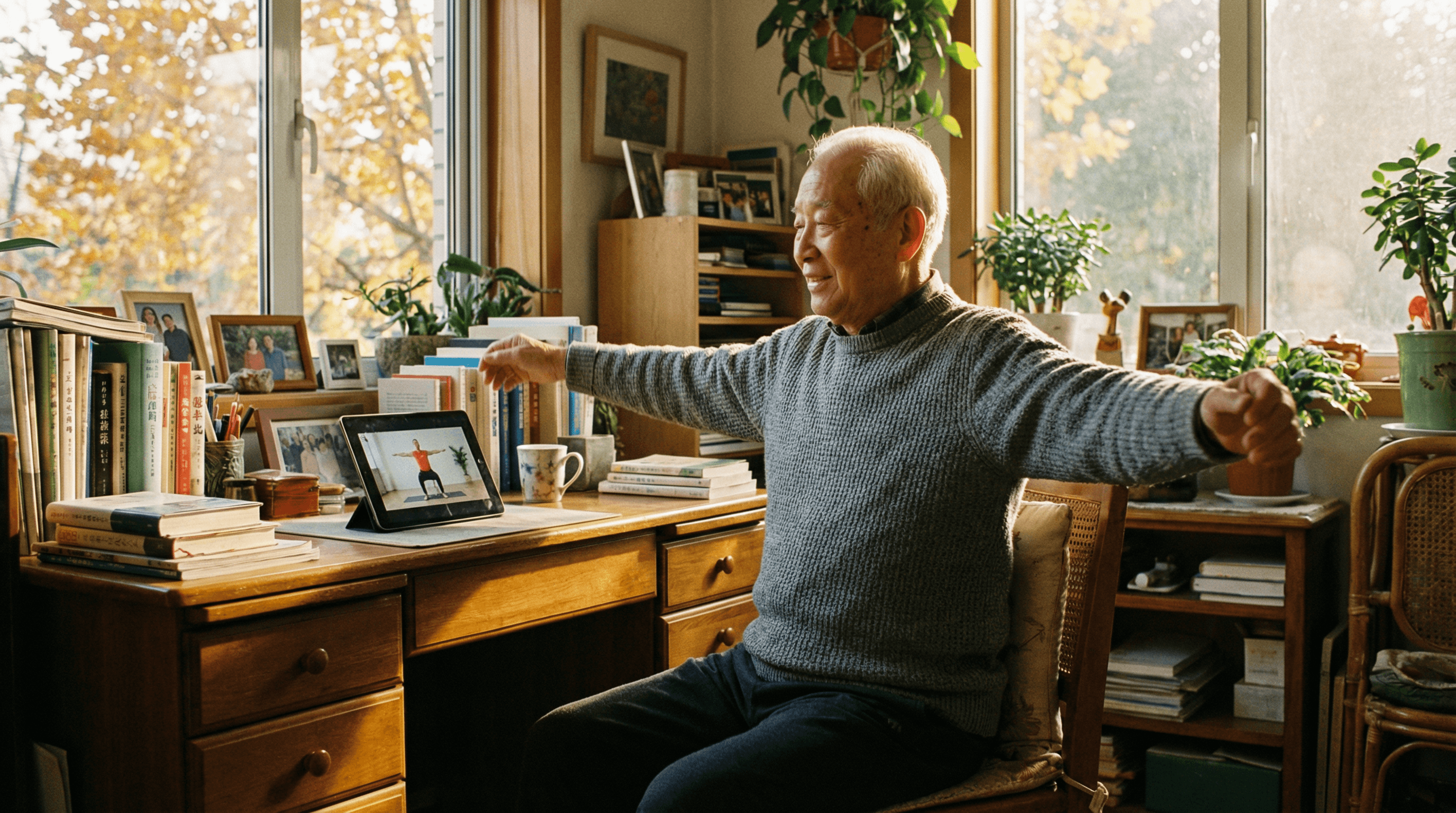
Pulmonary rehab isn't a pill. It's not surgery. It's not another inhaler.
It's a supervised program of breathing techniques, exercise training, and education — led by clinical exercise physiologists — designed specifically for people with COPD.
It retrains your diaphragm.
It teaches your body to release trapped air.
It rebuilds the muscles that are supposed to be doing the breathing — so your neck, chest, and shoulders can stop compensating.
The evidence is hard to argue with:
✅ 92% of patients feel significantly better in 12 weeks
✅ 45% reduction in all-cause mortality (Circulation, American Heart Association)
✅ 30% reduction in hospital readmissions within 90 days
✅ Significant improvements in walking distance, energy, and daily function
With numbers like that, you'd think every COPD patient would be enrolled.
But here's the problem.
Traditional pulmonary rehab requires you to drive to a hospital. Multiple times a week. Sometimes hours each way. Sit in a crowded room. Follow a rigid schedule.
For someone who gets winded walking to the bathroom — the drive alone is more exhausting than the treatment.
That's why 19 out of 20 people who qualify never complete the program.
Not because it doesn't work.
Because getting there is nearly impossible.
What If You Could Do It Without Leaving Your House?
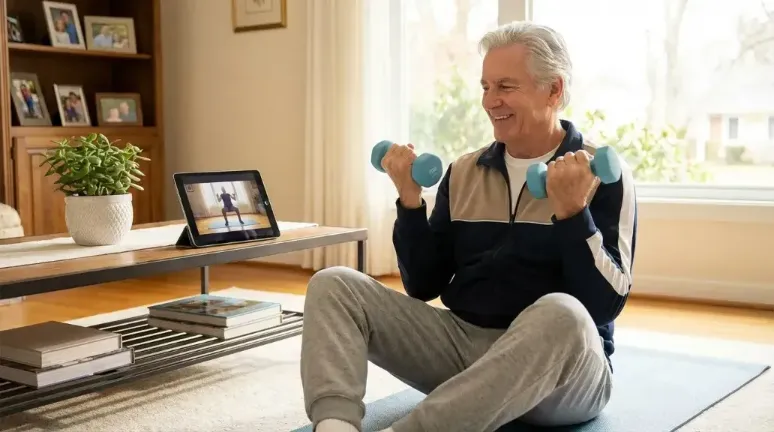
That's exactly what Carda Health built.
They took the same evidence-based pulmonary rehab program — backed by decades of research — and made it completely virtual.
No driving. No hospital. No crowded waiting rooms.
Just you, your living room, and a physiologist monitoring you live.
Here's how it works:
1. Check if you qualify — takes 30 seconds, no credit card
2. Get your free care package — shipped to your door with a tablet, heart rate monitor, blood pressure monitor, and pulse oximeter, all pre-loaded and ready to go
3. Start your program — with a dedicated Clinical Exercise Physiologist who watches your vitals live during every session
Your physiologist adjusts everything in real time.
Struggling today? They scale it back.
Feeling strong? They push you a little further.
Your oxygen levels, heart rate, blood pressure — monitored every second.
This isn't a YouTube video. This isn't a fitness app.
This is clinical care. From your couch.
People Who Couldn't Catch Their Breath Are Breathing Again.
Don't just take our word for it. Here's what real Carda patients say:
Lynn Brooks, 68:
"I went from getting a high heart rate and shortness of breath when taking 35 steps (yes, I counted them), to walking normally and performing activities that I thought were gone forever!"
Diane Ellsworth, COPD Patient:
"I was literally stuck in my house on my oxygen 24/7. Now I can go to the grocery store, visit friends, have a LIFE!"
Paul, 65:
"This weekend I was able to go to the baseball game with my grandson and walk around for the first time in a very long time — instead of using my scooter. After just 6 weeks."
Doris Helfer:
"My energy level has increased and I am now able to climb stairs without losing my breath."
"What's This Going to Cost Me?"
Probably nothing.
Carda Health is covered by Medicare. If you have qualifying supplemental or secondary insurance, you could be fully covered.
Here's the simplest way to think about it:
If you pay $0 when you see your physician — you likely won't pay for Carda either.
50% of Carda patients pay $0 out of pocket.
Compare that to hospital-based rehab: $22+ per session, plus up to $700 in transportation costs over the full program.
What Happens After 12 Weeks?
Here's exactly what happens when you enroll in Carda Health:
92% feel significantly better
82% report higher energy levels
81% lose a clinically significant amount of weight
98% manage stress better
53% gain in aerobic capacity
These aren't vague promises.
These are real outcomes from real patients.
The kind that mean the difference between gasping after tying your shoes — and walking through the grocery store like you used to.
See If You Qualify (30 Seconds)
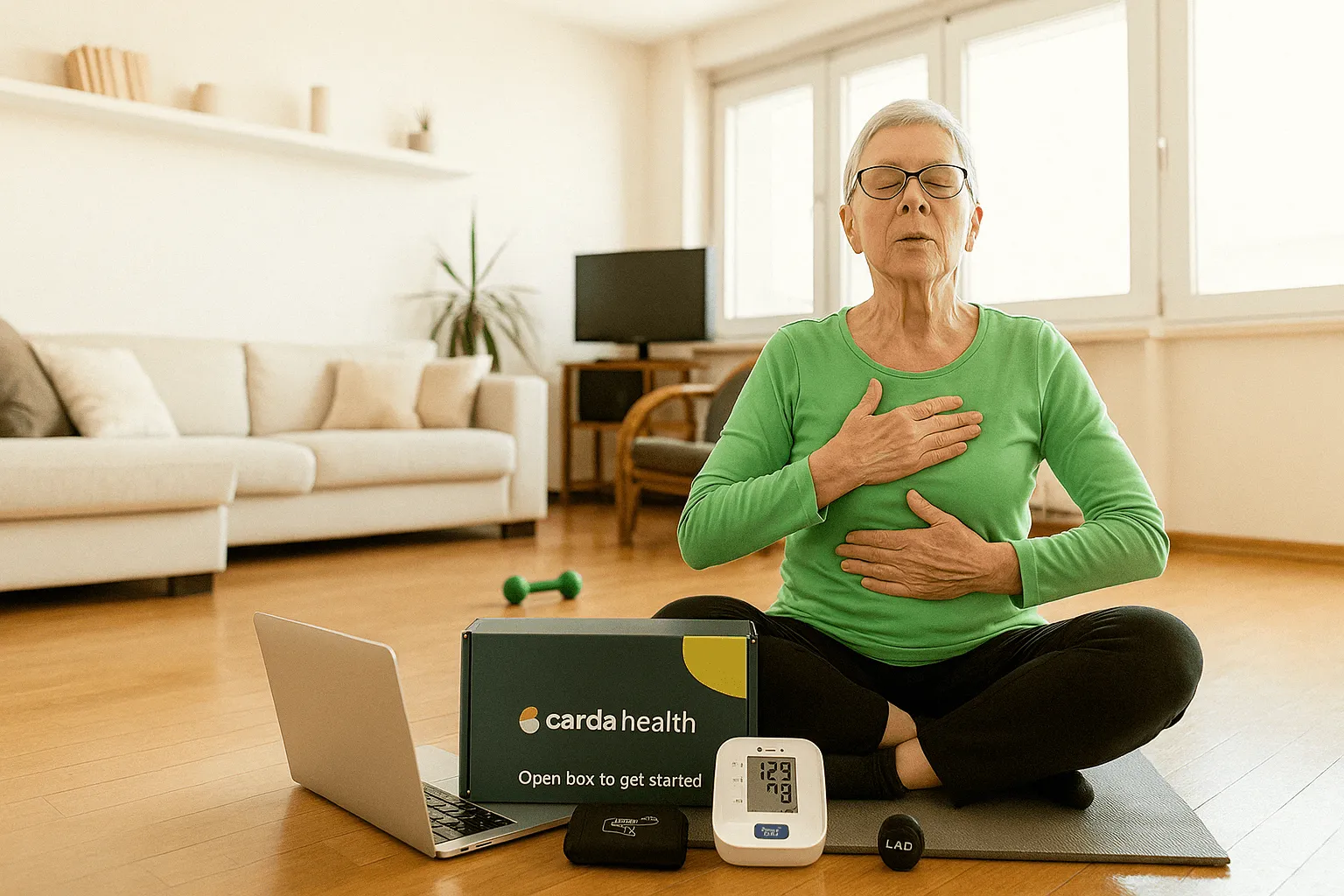
If you have COPD and this sounded like your morning, the next step is simple.
Check if you qualify for Carda's virtual pulmonary rehab program.
30 seconds. No credit card. No commitment.
You'll find out quickly if your insurance covers it — and whether this could work for you.
Carda Health has a simple online check. No complicated forms. No digging up medical records. Just basic questions that tell you right away if you're likely covered.
✅ Takes 30 seconds
✅ No credit card required
✅ 50% of patients pay $0 with qualifying supplemental insurance
✅ Available in 48 states
✅ Hundreds of 5-star reviews (4.9 ★ on Trustpilot)
✅ Physiologists trained at Mayo Clinic, Cleveland Clinic, Mount Sinai
If you pay $0 when you see your physician, you could pay $0 for Carda.
*with qualifying supplemental insurance
Trusted by thousands of patients
