About COPD
Jan 26, 2026
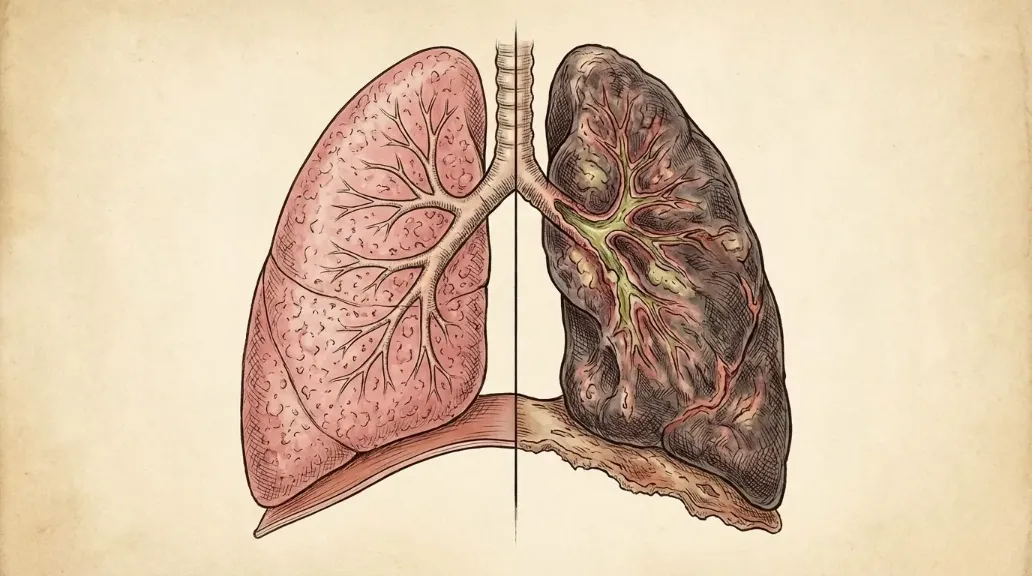
Learn the difference between emphysema, chronic bronchitis and COPD. Discover how they're related, symptoms, diagnosis methods, and why your specific type matters for treatment.
Chronic obstructive pulmonary disease (COPD) and emphysema are not the same thing – COPD is an umbrella term for a group of lung diseases, while emphysema is one disease under that umbrella. If you have emphysema, you have COPD, but if you have COPD, you may have emphysema, chronic bronchitis or both. Put another way, if COPD was a fruit, emphysema would be a type of fruit like an apple or orange.
COPD and emphysema are commonly confused. Many people use the two conditions interchangeably as though they were the same condition. It’s important to understand the difference between them though – it can help you manage your condition better, understand treatment options and get the most out of your medical appointments. In this article, we’ll break down both conditions and tell you everything you need to know.
COPD is an umbrella term for certain lung diseases that block airways and cause damage to other parts of the lungs making it hard to breathe. There are two main types of COPD: emphysema and chronic bronchitis. You can either have one or the other, or you can have both at the same time. Most people with COPD have both.
The main cause of COPD is smoking – about three out of four people living with COPD have a history of smoking (American Lung Association). You’re also at higher risk of developing COPD if you:
Are a women
Over age 65
American Indian or Alaska Native
Have been exposed to secondhand smoke or smoke from coal or a wood-burning stove
Have a history of asthma or childhood respiratory infections
Have been exposed to certain toxins, chemicals, dust or fumes
Have an alpha-1 antitrypsin (AAT) deficiency
Some common symptoms of COPD include:
Chronic (long-term) cough with mucus
Difficulty taking a deep breath
Shortness of breath
Wheezing (a high-pitched whistling sound when breathing)
Chest tightness
Fatigue or extreme tiredness
COPD is considered a progressive disease, meaning it gets worse over time. This usually happens over the span of several years or decades but for some, it can progress quickly. While it’s possible to manage and sometimes improve symptoms, the lung damage never goes away.
Emphysema is a lung disease that causes shortness of breath and is one of the two main types of COPD. It specifically affects the air sacs, called alveoli, in the lungs. The condition damages and breaks down the walls between the air sacs causing them to lose their shape and elasticity.
In healthy lungs, air sacs are very elastic – they can stretch out and snap back into place, keeping their shape. This allows them to fill up with air and push air out as you breathe. When emphysema damages the air sac walls, it’s harder for them to go back to their regular shape after breathing out. This traps air inside the lungs, known as overinflated lungs or barrel chest, and can make it feel like you can’t take a full breath.
Damaged walls also create larger spaces in the air sacs instead of many tiny spaces separated by borders. Larger spaces make the exchange of oxygen less efficient meaning it’s harder for your lungs to breathe in oxygen and out carbon dioxide, causing shortness of breath.
Many people show no or minimal symptoms in the early stages of emphysema. As the condition progresses, symptoms might include:
Shortness of breath
Frequent coughing or wheezing
Coughing that creates a lot of mucus
Chest tightness
Barrel chest
Swelling in the ankles, feet or legs
Unexplained weight loss
Smoking is the main cause of emphysema in the U.S. Up to three out of four people with emphysema have a history of smoking. Long-term exposure to some toxins like secondhand smoke, air pollution, chemical fumes or dust can also cause emphysema (MedlinePlus).
In rare cases, emphysema is caused by a genetic condition called AAT deficiency. This is an inherited condition in which your liver doesn’t make enough AAT to protect your lungs from irritants and damaging substances you breathe in.
Chronic bronchitis is the other main type of COPD, characterized by inflammation and irritation of the airways called bronchial tubes. Bronchitis is considered chronic when a cough with mucus (also called a productive cough) lasts three or more months per year for two or more years in a row.
Bronchial tubes carry air to and from the air sacs in your lungs. When bronchial tubes get irritated, they swell and narrow the airways. Irritation also causes a build-up of mucus making it harder to breathe.
Symptoms of chronic bronchitis may include:
Frequent coughing with mucus
Wheezing
Shortness of breath
Chest tightness
Fatigue
Unexplained weight loss
Muscle weakness
Swelling in the ankles, feet or legs
The main cause of chronic bronchitis is smoking. Other causes include long-term exposure to secondhand smoke, air pollution, dust, fumes or certain chemicals.
Chronic bronchitis has a lot of similarities to emphysema – many causes and symptoms overlap. But how they affect your lungs is different. Chronic bronchitis is an airway problem (irritation and mucus in the bronchial tubes make it harder for air to flow). Emphysema is an air sac problem (destruction of air sac walls causes trapped air).
If you’re confused about the difference between COPD and emphysema, you’re not alone. Even healthcare professionals sometimes use COPD as a shorthand to describe the lung disease you may have – emphysema or chronic bronchitis. And within those lung diseases, there’s a lot of overlap. Symptoms and treatments are similar, and many types of COPD are caused by smoking. Plus many people with COPD have more than one lung disease.
Understanding the differences can help you ask more direct questions and better understand your condition. So we’re breaking it down and giving you some questions you can ask your provider to help navigate your condition.
Take a closer look at the differences below:
COPD | Emphysema | Chronic Bronchitis | |
Category | Umbrella term for a group of lung diseases | One specific type of lung disease | One specific type of lung disease |
Scope | Group of diseases | One type of COPD | One type of COPD |
Part of the Lung That’s Damaged | Airways, air sacs or both | Air sacs only | Airways only |
Main Symptom | Varies depending on the type of lung disease | Severe shortness of breath | Cough with mucus |
Diagnosis | Always includes a specific disease within COPD | Always means you have COPD | Always means you have COPD |
How do you apply this information to your condition? Let’s say your provider tells you that you have COPD. Your next question should be, “Which type? Do I have emphysema, chronic bronchitis or both?”
If you have emphysema, then you have COPD. Emphysema is always COPD. This means your air sacs are damaged. It’s also common to have chronic bronchitis in addition to emphysema, so ask your provider if that’s the case for you. But whether you have emphysema, chronic bronchitis or both, you have COPD.
If your provider tells you that you have both emphysema and chronic bronchitis, you’re in the majority. Most people with COPD have both conditions. This means that both your air sacs are damaged (emphysema) and your airways are inflamed (chronic bronchitis). Having both conditions still means you have COPD.
There is similarity in how emphysema, chronic bronchitis and COPD in general are diagnosed. It consists of a medical history, physical exam and diagnostic tests.
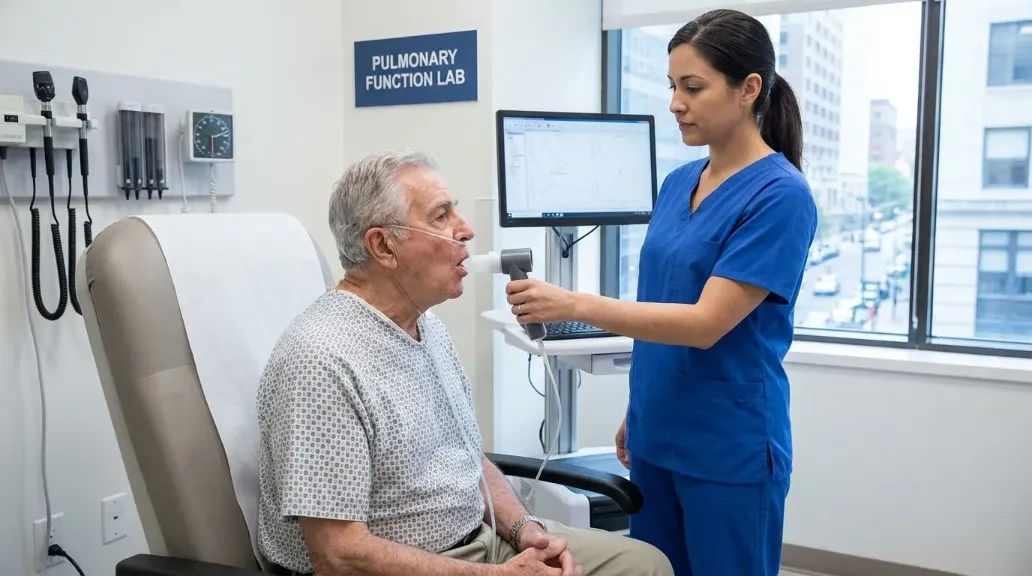
Pulmonary function tests such as spirometry, lung volume tests, lung diffusion tests, pulse oximetry or exercise stress tests show how well your lungs are working. Spirometry is the main pulmonary diagnostic test for COPD. You breathe out hard and fast into a machine that measures how much air your lungs can hold and how well it flows.
Imaging such as chest x-rays or computed tomography (CT) scans show pictures of your lungs to assess any damage. You’ll likely also need blood tests. An arterial blood gas analysis will measure how well your lungs bring in oxygen and push out carbon dioxide. An AAT deficiency blood test will confirm whether you have this genetic condition that causes COPD.
Additionally, lung diffusion tests help diagnose emphysema by measuring how well your body moves oxygen and carbon dioxide between your blood and lungs. There are also physical signs – barrel chest, breathing out longer than you breathe in and unexplained weight loss.
Having a cough with mucus for three or more months is a key indicator of chronic bronchitis. Sputum tests also look for infections or illnesses in the mucus you cough up to determine a cause.
Most people with COPD have both emphysema and chronic bronchitis. When you are diagnosed with COPD, your provider should determine whether you have one or both of these lung diseases. And if you have both, your provider will likely identify which is the main condition.
Treatments are often the same whether you have emphysema, chronic bronchitis or both. Because COPD is not curable, treatment options will focus on managing symptoms and improving your quality of life.
The most important way to improve COPD symptoms is to quit smoking which can slow lung damage. It’s also important to stay current on vaccines like flu and pneumonia to prevent serious complications from illnesses.
Certain medications might be prescribed to manage COPD such as bronchodilators to relax the muscles around the airways and inhaled steroids to reduce inflammation. Most are given through an inhaler or a nebulizer which turns liquid into a breathable mist.
Supplemental oxygen therapy might be given to make breathing easier. And a pulmonary rehabilitation program can provide breathing techniques, exercises and nutrition education.
Additional treatments for emphysema might include:
Pursed-lip breathing exercises to keep airways open longer and release trapped air
Lung volume reduction surgery (LVRS) to improve elasticity
AAT therapy
Additional treatments for chronic bronchitis might include:
Medications to thin mucus
Chest physiotherapy to loosen mucus by knocking on your back or chest
Controlled coughing to loosen mucus
Antibiotics
Humidifiers
Knowing which type of COPD you have can help you understand your condition and how it’s affecting your lungs. This can also help you decide whether to undergo genetic testing, especially if you don’t have a smoking history.
Your treatment options may differ slightly if you have emphysema or chronic bronchitis, but they will largely remain the same – lifestyle changes, quitting smoking, bronchodilators, pulmonary rehabilitation and oxygen therapy.
Despite similar treatment plans, the knowledge of which type of COPD you have can be empowering. It can allow you to understand your symptoms, know what triggers symptom flare-ups and better follow a tailored treatment plan.
Can you have emphysema without having COPD?
No, you cannot have emphysema without having COPD. Emphysema is a type of COPD. You can have COPD without having emphysema, but if you have emphysema you always have COPD.
Can you have COPD without having emphysema?
Yes, you can have COPD without emphysema. COPD is a group of lung diseases that can include emphysema, chronic bronchitis or both.
Which is worse—COPD or emphysema?
Emphysema is a type of COPD so one is not worse than the other.
Can emphysema turn into COPD?
Emphysema is a type of COPD. It doesn’t develop into COPD, it is always COPD.
Do treatments differ for COPD vs emphysema?
Sometimes. Usually the treatments for COPD, whether you have emphysema or chronic bronchitis, are the same. But there are some treatments that target emphysema specifically. Even if you are treating emphysema, you are still treating COPD because emphysema is a type of COPD.
Can you reverse emphysema or COPD?
No, you cannot reverse lung damage from emphysema or other types of COPD. But you can slow lung damage and improve your symptoms.
How do I know which type of COPD I have?
Your healthcare provider will conduct a series of diagnostic tests to determine whether you have COPD and which type of COPD you have. This might include a medical history, physical exam, pulmonary function tests, imaging tests and blood tests.
Does it matter whether I have emphysema or chronic bronchitis?
Yes and no. The treatment options for emphysema and chronic bronchitis are largely the same. But knowing which one you have can help you better understand your condition and design a tailored treatment plan for your symptoms.
Remember, COPD is the umbrella term for a group of lung diseases. If you have emphysema, you have COPD. But if you have COPD, you might have emphysema, chronic bronchitis or both. While treatment options are largely the same, knowing which type you have can help you learn how your lungs are impacted and what triggers symptom flare-ups.
Don’t be afraid to ask questions about your diagnosis. And regardless of which type of COPD you have, when you’re ready to quit smoking, you don’t have to do it alone. Access free tools and resources to help you quit smoking and improve your COPD symptoms (Smokefree).
“Emphysema.” MedlinePlus, U.S. National Library of Medicine, 25 Jan. 2024, medlineplus.gov/emphysema.html#:~:text=Up%20to%2075%25%20of%20people%20who%20have%20emphysema%20smoke%20or%20used%20to%20smoke.
Smokefree, National Institutes of Health, smokefree.gov. Accessed 3 Dec. 2025.
“What Causes COPD.” American Lung Association, 19 Mar. 2025, www.lung.org/lung-health-diseases/lung-disease-lookup/copd/what-causes-copd#:~:text=About%2075%20percent%20of%20all%20COPD%20cases%20occur%20in%20people%20with%20a%20history%20of%20smoking.
Related Articles